SQUARE NUMBERS
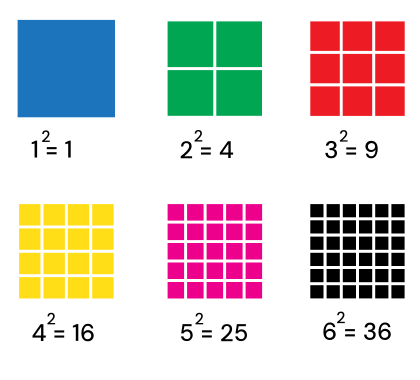
Square numbers are the result of multiplying any integer by itself. Square numbers can be represented in two dimensions as stacks of square blocks.
ARRANGEMENTS OF SQUARE NUMBERS
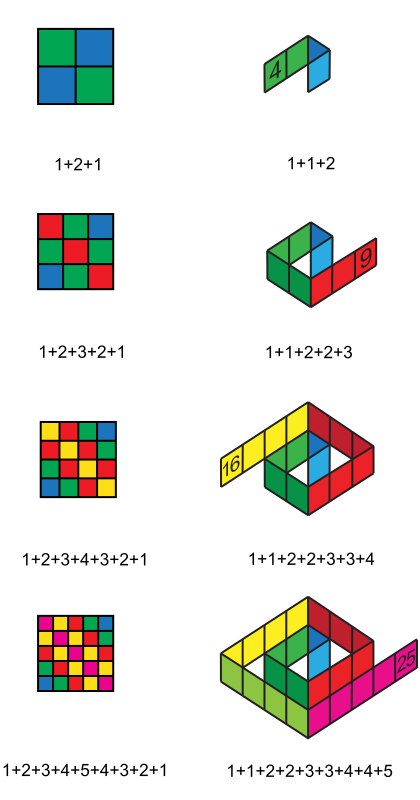
Coloring the blocks in the first column reveals a pattern unique to square numbers. Rearranging the blocks in the second column establishes a linear order by way of the associative property.
NUMBER LINE
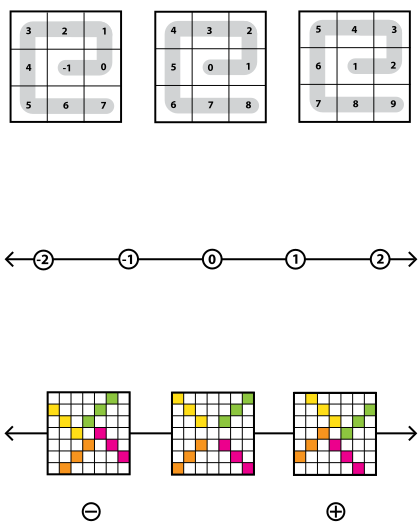
A square spiral is a segment of a number line which occupies two dimensional space, a spiral vector which can be fit neatly into a square grid. Units along the number line can be any integer, positive or negative.
SQUARE SPIRAL
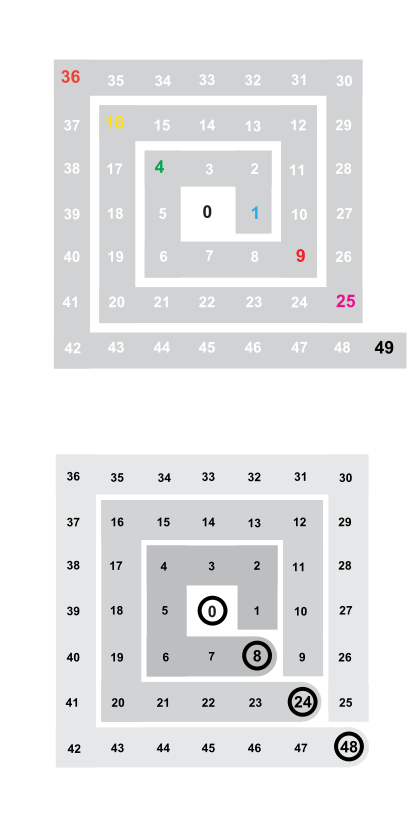
Alternatively a square spiral can be represented as a series of concentric square rings. Each ring begins with an odd square number and ends with the next square number minus one. Each successive ring contains 8 more cells then the previous ring.
ARRANGEMENTS OF TRIANGULAR NUMBERS
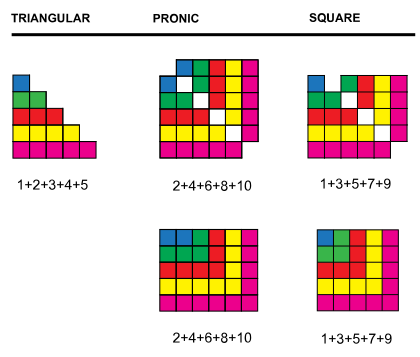
Triangular, pronic, and square numbers all result from adding successive sets of counting, even or odd numbers. Pronic numbers are double the value of triangular numbers whereas square numbers result of adding two successive triangular numbers together.
TRIANGULAR ARRAYS
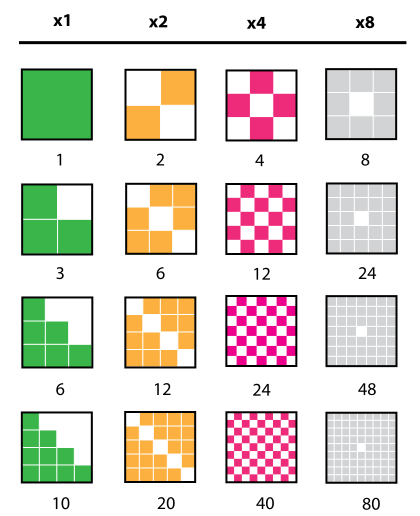
The arrangements of blocks in the table above highlight the progression of triangular numbers and its multiples. Each column doubles the amount of blocks from the previous column. Note how x8 triangular numbers forms an odd square number -1.
SQUARE ARRAYS
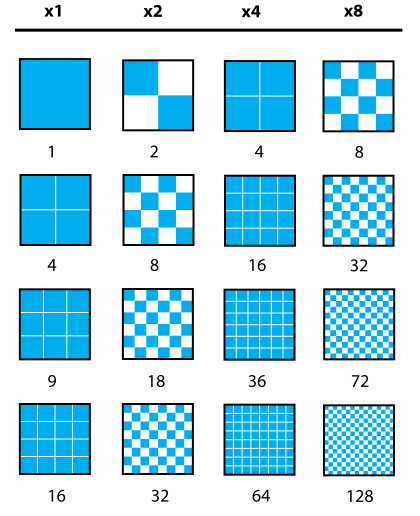
The arrangements of blocks in the table above highlight the progression of square numbers and its multiples. Each column doubles the amount of blocks from the previous column.
LINEAR SCALE
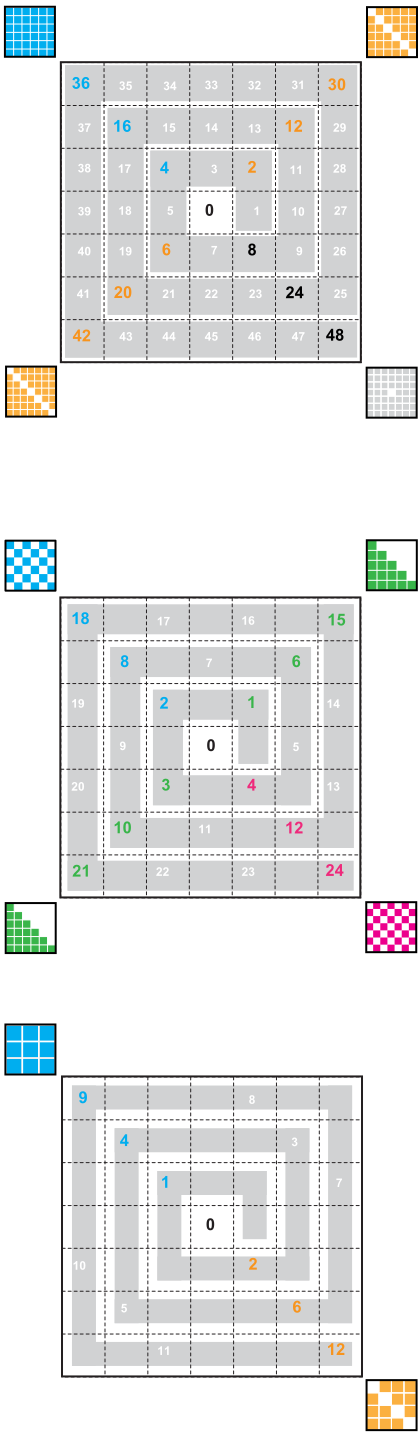
The square spiral scales to any unit length. The top most spiral counts one unit of length for every grid cell, the next counts one unit of length for every two grid cells, and the last counts one unit of length for every four grid cells. The sequences of numbers generated diagonally across the spiral array scale down proportionally as well.
BALANCE
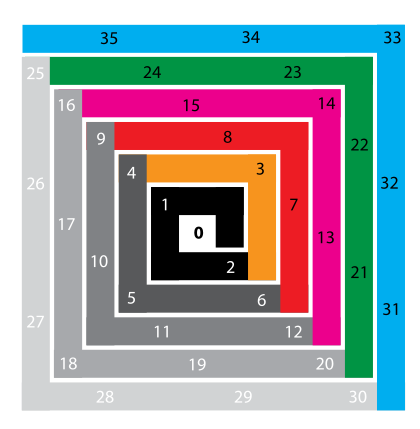
An unusual balance results from dividing the square spiral diagonally just above the center. The sum of linear units in the bottom portion of the spiral (gray) equal the sum of linear units in the upper section (rainbow).
OBSERVATION
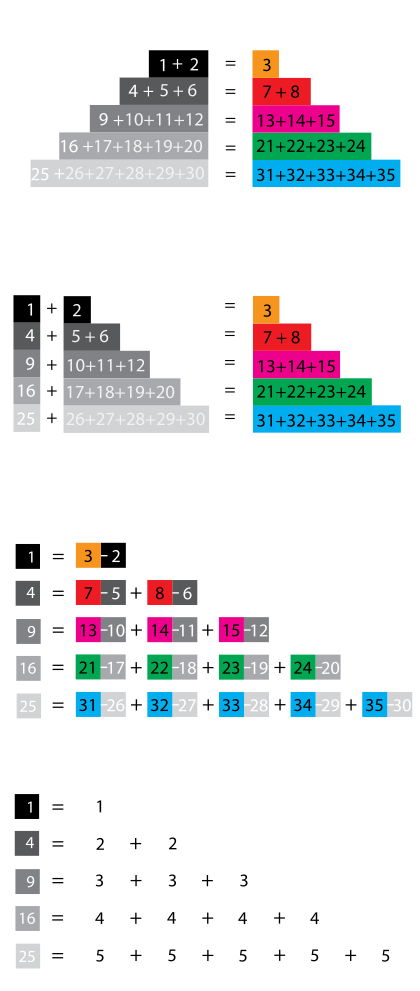
To clarify the observation, separate out the square numbers from the array. Next pair the remaining integers from each side in ascending order and subtract. The final result confirms our original observation and demonstrates how this pattern holds true for each subsequent layer that is added to the array.