THE SQUARE ROOT OF 2
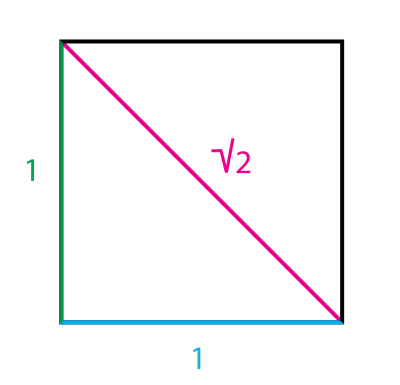
The square root of 2 is a number that when multiplied by itself equals 2. It is also the hypotenuse of a right triangle whose legs are 1 unit each.
ADJUSTMENT
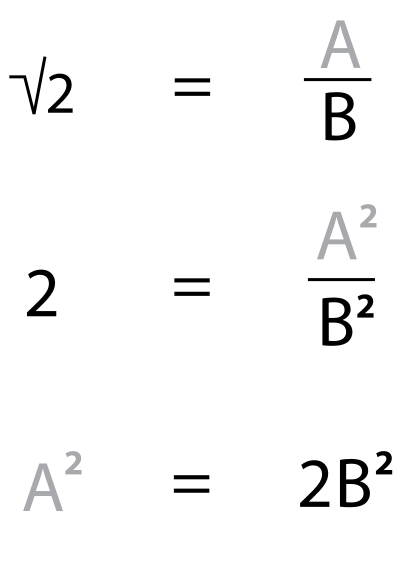
Suppose the square root of two could be expressed as the ratio between two numbers A/B. The result would be an equation in which the numerator squared is equal to double the denominator squared.
APPROXIMATING THE SQUARE ROOT OF 2
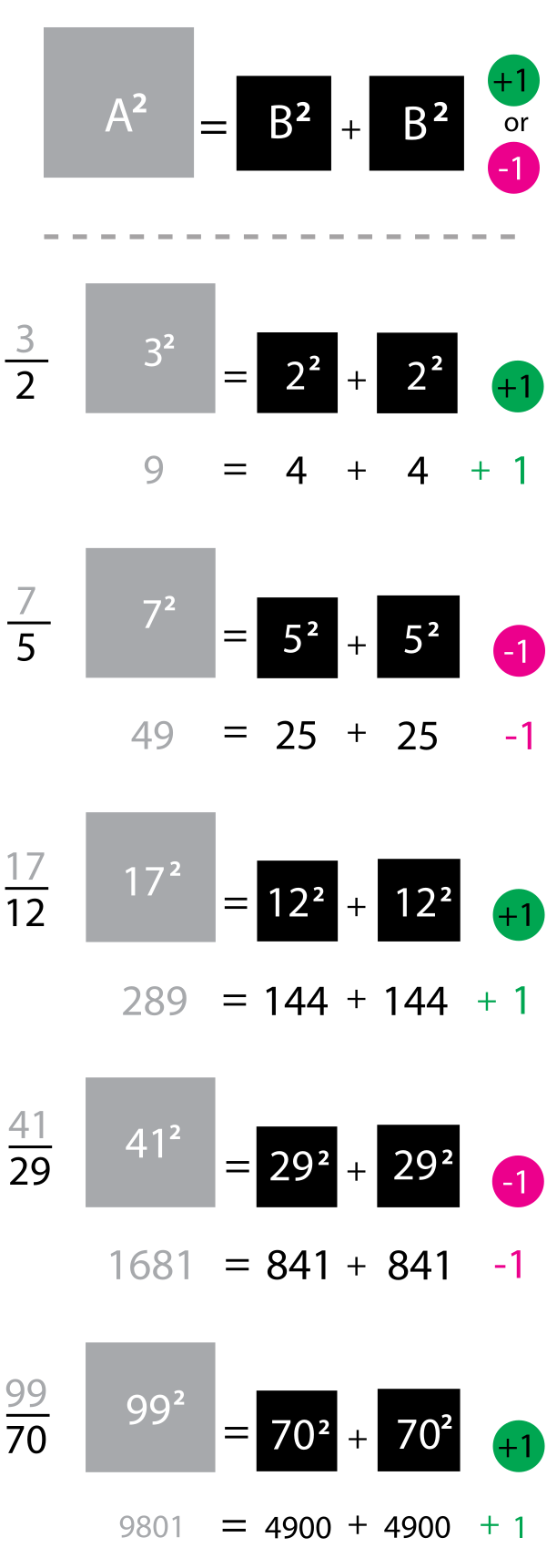
The square root of 2 is an irrational number, meaning that it cannot be expressed as the ratio of two whole numbers A/B. There is, however, two sequences that when combined together come close to achieving this proportion, always missing the mark by +/- 1.
A COMPOSITE SEQUENCE
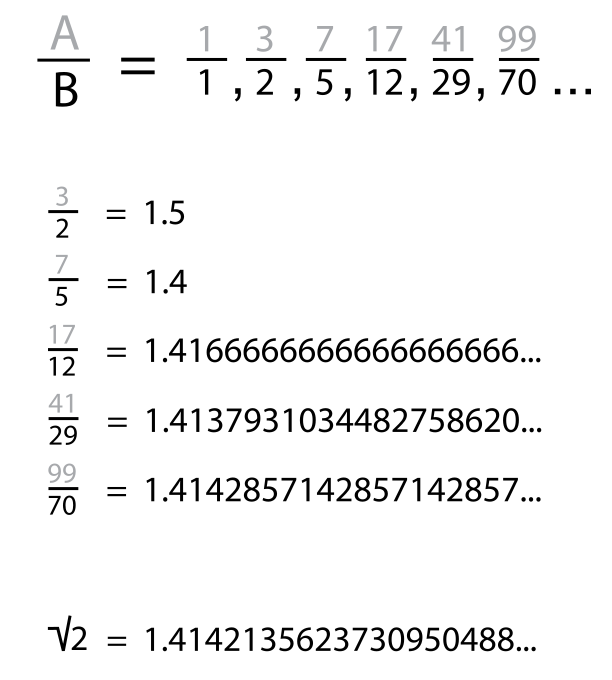
Known since ancient times, the series of fractions A/B are a composite of two sequences, the Pell numbers (1,2,5,12…) and the Half-companion Pell numbers (1,3,7,17..). Together they form the closest rational approximations of the square root of 2. Each successive ratio more accurate then the previous, alternating between overestimating and underestimating the square root of 2.
PELL AND HALF COMPANION PELL SEQUENCES
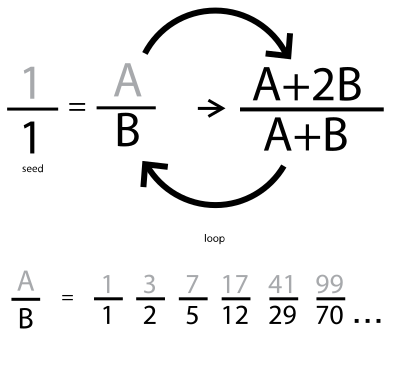
Pell and half companion Pell numbers can be generated a using a recursion method. Starting with 1/1 and continuing forward by plugging each successive term back into the fold, adding denominator to numerator to generate the next denominator, then adding the two denominators together to generate the next numerator.
TRIANGULAR SQUARE AND TRIANGULAR PRONIC SEQUENCES
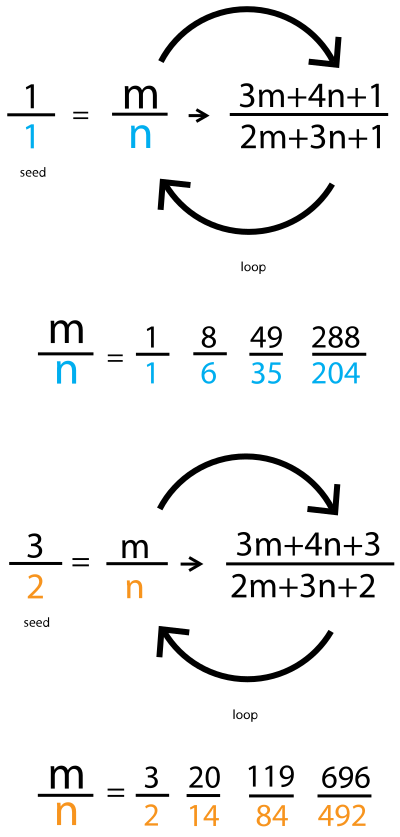
The intersection of triangular and square numbers can be expressed as a ratio between the mth triangular and nth square ordinal numbers, this is true for the intersection of triangular and pronic numbers as well. This proportion can be generated a using a recursion method, starting with a seed and plugging each successive term back into the fold.
INTERLOCKING SEQUENCES
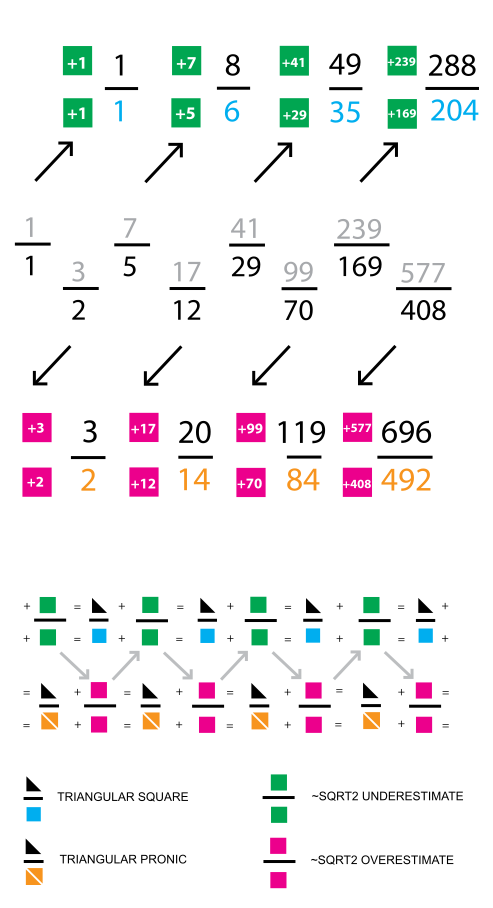
Composite Pell and Half-companion Pell sequences alternate between ratios that overestimate and underestimate the square root of 2. The triangular square progression interlocks additively with the series of ratios that underestimate the square root of 2. The triangular pronic progression interlocks additively with the series of ratios that overestimates.
INTERSECTION
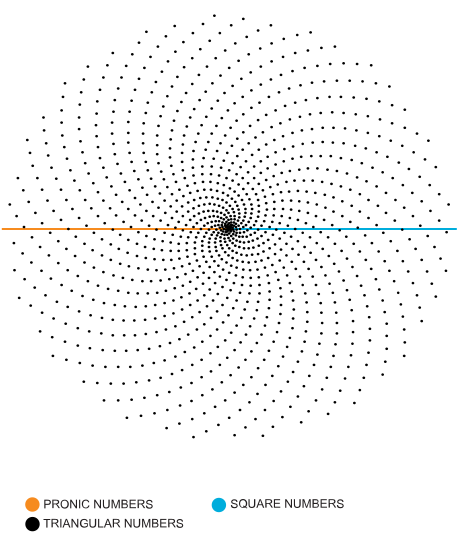
Above are the first 696 triangular numbers inscribed within 492 concentric even-sided polygons. Triangular numbers intersect pronic and square numbers along the x-axis. The subsequent coordinates form a series of line segments whose length from the center is a successive Pell number.