TRIANGULAR NUMBERS
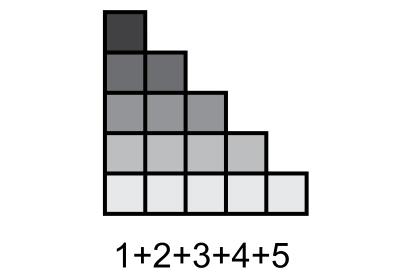
Triangular numbers are equal to the sum of the natural numbers. The next triangular number is generated by adding the next natural number to the base of the triangle.
CONCENTRIC POLYGONS
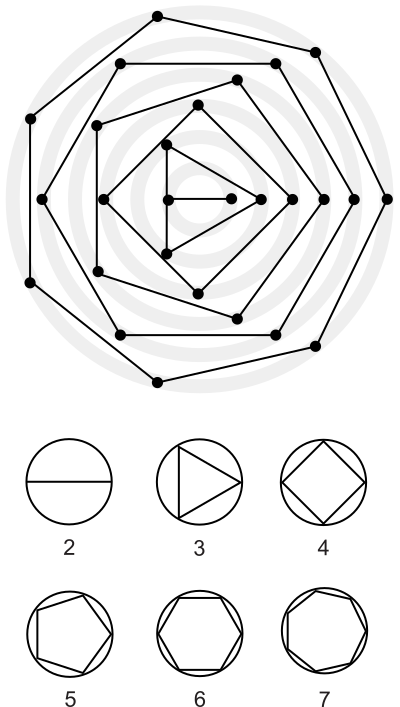
Inscribed within a set of concentric circles, this series of regular polygons begins with a single chord inscribed at the innermost circle then expands outwards always increasing the number of sides of the next polygon by 1.
CORRELATION
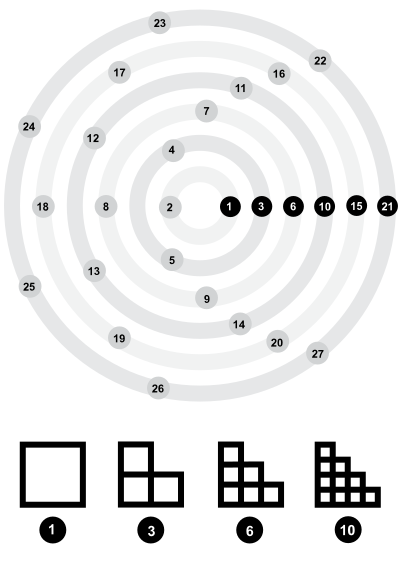
Each successive polygon is inscribed with its vertex facing right. Each node is numbered starting from its vertex and rotating in a counterclockwise direction. Triangular numbered nodes result as each successive ring increases by the amount of the next polygon.
THE FIRST 629 POINTS
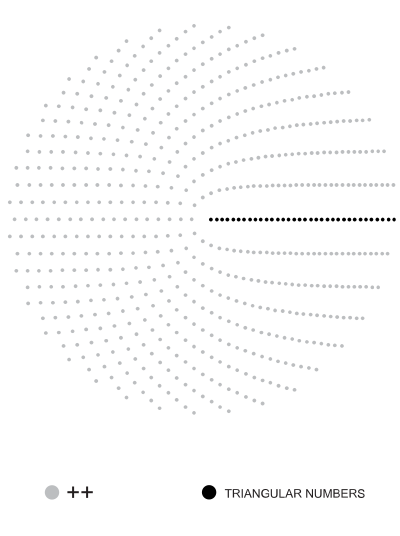
Above are the first 629 points inscribed within 34 concentric polygons. The vertex of each polygon line up to form a row of triangular numbered nodes.
PRONIC AND SQUARE NUMBERS
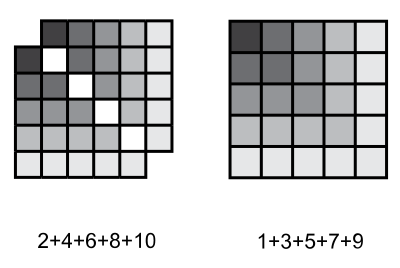
Pronic numbers are equal to the progressive sum of even numbers whereas square numbers are equal to the progressive sum of odd numbers.
EVEN-SIDED POLYGONS
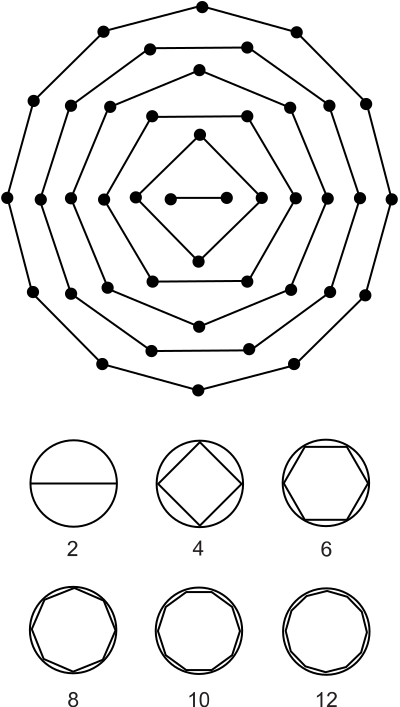
In this series each successive polygon has an even number of sides. The progression between each ring is 2 nodes and the arrangement is reflected across the x and y axis.
CORRELATION
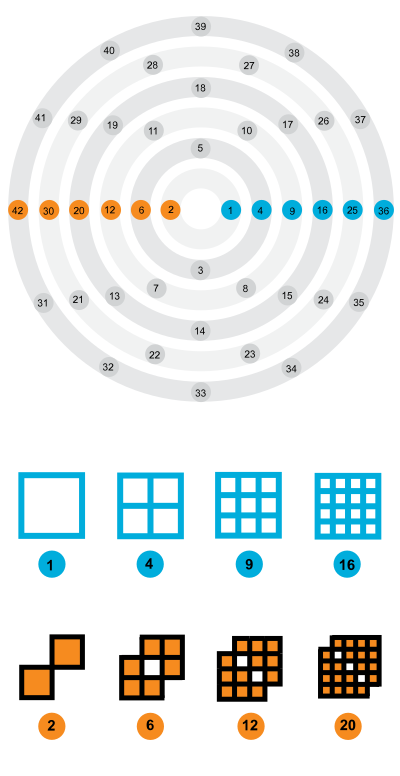
Again, each successive polygon is inscribed with its vertex facing right. Each ring is numbered counterclockwise bisected on the right side with a square number and ending on the left side with a pronic.
THE FIRST 650 POINTS
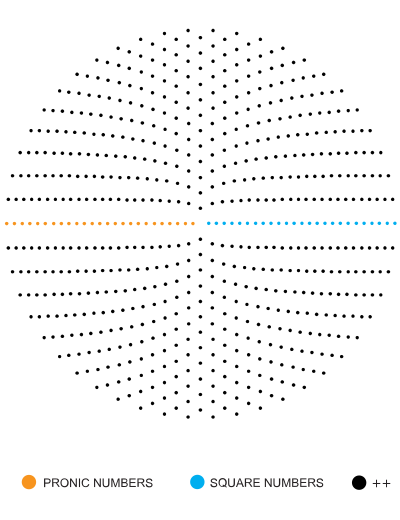
Above are the first 650 points inscribed within 25 concentric even-sided polygons. The horizontal axis is split between square numbers on the right and pronics to the left.
TRIANGULAR SQUARE AND TRIANGULAR PRONIC NUMBERS
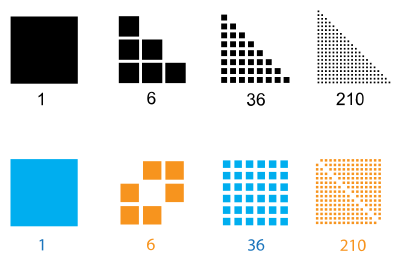
Numbers which are both triangular and square are called triangular squares, numbers which are both triangular and pronic are called triangular pronics.
TRIANGULAR, SQUARE, AND PRONIC
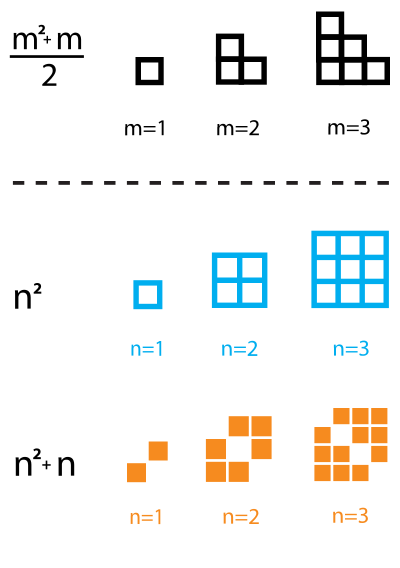
Inputting the next counting number into the formulae above outputs the next number in either the triangular, square, or pronic sequence. The respective m-valued or n-valued number correlates to the sequential order of the term in the series.
ALTERNATING SEQUENCES
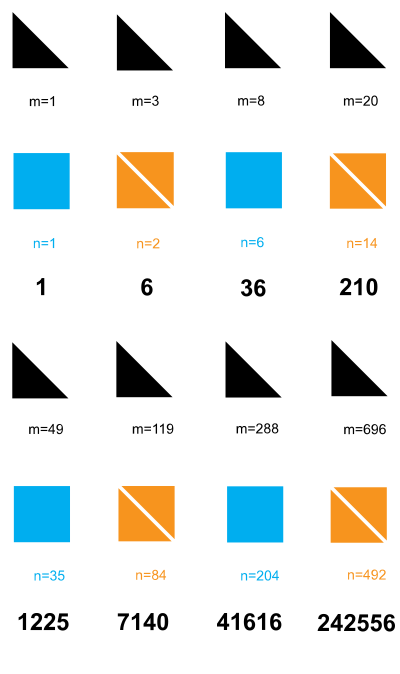
Above is a diagram which maps out the first 4 triangular square and triangular pronic numbers as well as their respective m and n-values. These two series when put in ascending order, alternate back and forth between triangular square and triangular pronic values.
THE FIRST 49 TRIANGULAR NUMBERS
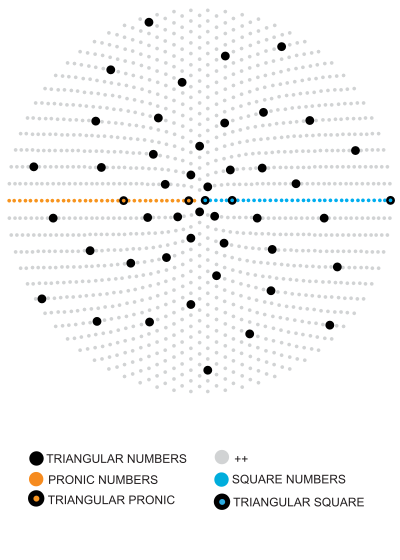
Above are the first 49 triangular numbers inscribed within 35 concentric even-sided polygons. While pronic and square numbers line up in a row, triangular numbers form a galaxy-like spiral.